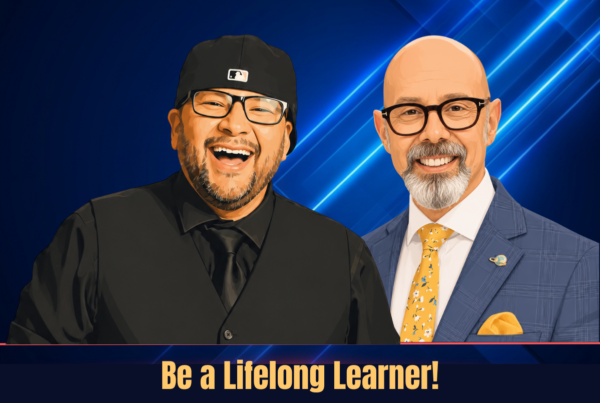
If you’ve heard me speak about sales, or read my books, you’ve probably heard me use the phrase “Would it make sense…?” as a soft lead-in to asking for the sale. I also always credit a speaker friend, Lois Creamer, from whom I learned this, years ago. So, it’s only fitting that I have Lois on and talk about the origin of the phrase, how it’s used and more fun stuff. Listen to this new dialog episode for some fun tips and conversation about sales.
Lois Creamer is an industry expert working with speakers who want to book more business, make more money and fully monetize their message. She is the author of “Book More Business: Make Money Speaking”, and “The Speaker Author: Sell More Books and Book More Speeches”.. Both books are available on Amazon as well as book stores.
Lois’s clients include such luminaries as Chicken Soup’s Jack Canfield; author of The Sales Bible Jeffrey Gitomer; Patricia Fripp and more.
Her expertise and no-nonsense style has led her to invitations to present at NSA (National Speakers Association) annual meetings and for every local chapter. She also presents at Canadian Speakers Association, Professional Speakers Associations – India, England and Ireland. In 2021, she was named an “Honorary Fellow” in the Professional Speaking Association of the United Kingdom and Ireland (PSAUKI).
Lois has appeared in Forbes, Bloomberg Business, Speaker Magazine and The Wall Street Journal.
Connect with Lois:
- Email: [email protected]
- Web: http://www.BookMoreBusiness.com
- Blog: http://www.BookMoreBusiness.com/blog
- Twitter: @loiscreamer
- FB: http://www.Facebook.com/LoisCreamer
- LinkedIn: http://www.Linkedin.com/in/LoisCreamer
- Instagram: http://www.Instagram.com/loisbmb
Listen to this and all episodes on Apple Podcast, YouTube or your favorite app/site:
- Apple Podcast:
- YouTube: www.WeddingBusinessSolutionsPodcast.tv
- Spotify: https://spoti.fi/3sGsuB8
- Stitcher:
- Google Podcast:
- iHeart Radio: https://ihr.fm/31C9Mic
- Pandora:
Below is a full transcript. If you have any questions about anything in this, or any of my podcasts, or have a suggestion for a topic or guest, please reach out directly to me at [email protected] or contact me via text, use the short form on this page, or call 732.422.6362
Please be sure to subscribe to this podcast and leave a review (thanks, it really does make a difference). If you want to get notifications of new episodes and upcoming workshops and webinars, you can sign up at www.ConnectWithAlanBerg.com
– Would it make sense is a phrase I use all the time. And would it make sense for you to hear who that came from? Yeah, I think it would. Listen to this episode and find out. Hi, it’s Alan Berg. Welcome back to another episode of the Wedding Business Solutions Podcast. I am so, so excited to have Lois Creamer on, because she is the one that taught me to say, or ask, I should say, would it make sense? Lois, welcome.
– Alan, It’s great to be here. Honored to be with you.
– Well, thank you so much. And not only are you the author of Book More Business, how people can can speak more, teach people how to do a positioning statement. Tell us yours.
– Well, I’ll tell you mine. And it’s the thing that I say when people ask me what I do, instead of just saying I’m a consultant. I work with speakers, consultants, and experts who want to book more business, make more money, and monetize their message. It’s a concept and outcome statement, Alan. And quite frankly, it’s the reason I started my business over 20 years ago. Because my sense was a lot of people sucked when people asked them what they did.
– And it’s that, the elevator pitch, whatever you want to call it. And people stumble upon that or they think it’s 30 seconds or something like that. So, say it again without any before and after. So, Lois, what do you do?
– I work with professional speakers, consultants, and experts who want to book more business, make more money, and monetize their message.
– Book more business, make more money, and monetize their message. That’s what you do. Many people who are listening are either also do some speaking in the industry or might be aspiring to speak. But if you listen to that, that’ll give you a little of an idea of how do you say very quickly who you do something for, how you help them, what the outcome is for them. Love it, love it, love it, love it. So, I speak all the time about the business of weddings and events. And whenever I’m speaking about sales, I always drop your phrase. And I don’t remember when I first heard it from you, whether it was in the book or whatever, but would it make sense, and when I say that to people, they go, yeah, that does make sense. Like of course it makes sense because you’re making it easy for them. You’re making it easy for them. So, where did that come from? When did you first say that and went, whoa, that was pretty good.
– You know, I think that the first time I said it, years ago, I used to speak to corporate sales teams on sales. And by the way, my positioning statement for that was I work with organizations that want to fast forward their selling skills so they’ll be more successful at what they do. And in following up with a gentleman who hired me, I did a little thing I call a follow up thank you call, thanks for bringing me in, that kind of thing. After that meeting, Alan, I was approached by four sales managers and I thought how interesting, they wanted to discuss some of the things that I talked about on the platform. So, in my follow up thank you call, I was thinking about that and I’d like to say this was a strategic plan, Alan, but it wasn’t. I probably should say it was all strategic, Alan. I was talking to this gentleman and I said, you know, in speaking to your sales managers after my program, they had some questions, we had some good discussion. I’m wondering if you think it would make sense for me to work with your sales managers to actually implement the ideas, tactics, and techniques I talked about in the platform. And much to my surprise, he said, yes. what would that look like? And Alan, I had no idea because, so I said, I’ll have a few options for you in an email shortly. So, I hung up, quickly went to my bookshelf and got out the Alan Weiss book on proposals. And sent a very Alan Weissian three part proposal, got an immediate email back saying, yes, let’s go with the middle one. And that became.
– Hold on. Okay, so you approached them after with your thank up call, thank you call, thank you for having me on call. And what was the line that you used to them that this came out of?
– I just said to the gentleman who made the decision to bring me in to speak to them. I said, after speaking with some of your sales managers, do you think it would make sense for me to work with them to actually implement the ideas and tactics that I talked about on the platform? Because if you do, we could make that happen, and you wouldn’t have to bring me in. And this was before Zoom, by the way. This was when we were using Skype and some Google program, I can’t even remember what it was. But much to my surprise, he said, that sounds like a great idea. What would that look like? I had no idea. So, I said, I’ll get a proposal to you. I went to my bookshelf, got my Alan Weiss book out, and sent him a three option proposal, got an email back in nanoseconds from him accepting the middle option. And that’s when I came up with what I call aftercare, which is the last chapter in my Make Money Speaking book. How do you take a next step after you’ve worked with someone, what kind of services can you provide after the event, after the consult, after your initial work? And so that’s, how do you think it would make sense? I think originally happened. But I like it because, you know Alan, I suggest for professional speakers when they’re selling an event to sell books. I know you do, you sell a lot of books. And if somebody is hiring me for a meeting and I say, do you think it would make sense for everybody in the audience to be able to walk away with a companion book for this program? I want somebody to think before they say the answer. Because if they’re going to say no, they sound kind of nutty.
– Right. Right. And again, it’s what you’re listening here is first of all the upsell, right? You had the speaking engagement. Now this is the upsell. And my favorite phrase, so I give you the, would it make sense, my favorite phrase is this, if you don’t ask, the answer always no.
– You know, that is totally in line with my favorite saying, you risk a yes every time you ask for something, are you willing to take the risk?
– There you go.
– And we speak of the same language.
– That’s why I have you on. Excellent. So, this, again, I give these cards out, those of you watching on YouTube, those of you listening probably know my cards already. These little square cards that say, if you don’t ask, the answer is always no. And what is that upsell? What is that sale? Just because they said yes in the beginning doesn’t mean they won’t say yes again if you have to ask them. But what I love about the, would it make sense is it’s putting the thought in their head for them to go, yeah, that would make sense. Or no, it doesn’t make sense. And which is fine as well, because if you don’t ask, the answer always no there. And then with the upsell is you’re giving them the outcome. You’re not just saying, do you want this thing, you’re selling the outcome. And that’s something I try to tell people is don’t sell the stuff. Nobody wants your stuff. They want the outcome from that stuff.
– You know, you and I are such kindred spirits. We know that, we’ve known each other a long time. But one of the things that I tell my clients, all of my clients is people are buying you for the transition that you give them, the solutions that you give them, the outcomes. And I always say, that’s why when selling whatever you’re selling, quite frankly, speak in outcomes because that’s what people want to buy. They don’t want to buy the process. If I said, Alan, do you want to learn how to be more effective at sales in the next 10 days? Or, Alan, I’d like to share my 123 step plan to be more effective. So, I totally agree with you. Speak in outcomes.
– Right. Speak in outcomes. But the leading into that with the would it makes sense. So, one of the ones that I use is photo booths. Photo booths that a lot of people sell is the photo booth. And they sell the type of a photo booth. It’s a mirrored booth, it’s a 360 booth, it’s a this booth and whatever. One of my clients is selling three times more photo booths than he ever sold because he said, you know, would it make sense to have something fun for your guests when they’re not on the dance floor?
– No, that makes no sense.
– Right, and he’s selling three times as many because it also brings up a negative that you want to eliminate, which is, oh, they’re not on the dance floor, what are they doing? Waiting online to get a drink? What are they doing? Or if you’re selling bartending services or bars, would it make sense to have another bar in the other room so that your guests, when they’re over there, they don’t have to come back in to get a drink or they don’t have to wait online or.
– Absolutely.
– Right, but bring up that outcome. I was just at a wedding over the weekend, this will be coming out much later, my niece’s wedding. Amazing venue, happens to be a friend, client of mine, although she didn’t pick it through me, she picked it herself, which was good choice. And a great band. And I love a band because I’m a keyboard player, so I love a great band.
– Absolutely.
– They didn’t hire a 10 piece band. They hired the fact that that dance floor was packed the entire night that people were having such a great time. That’s what they bought. Would it make sense to have a band that’s so versatile that they can play any kind of music, whatever it is that you want, whatever the generations are going to be there so you and your friends can dance all night. No, no. Let’s have a terrible band, right?
– You know, plus the other element of that in my mind, Alan, is that you’re offering, when you’re offering it after working with someone, or even quite frankly in the example you just gave, you’re lending some accountability to the process. And sometimes that’s what can be sorely lacking. You know, we can go in and give a great speech on selling, but if people walk away thinking that was great information and don’t apply it, or have questions on how to process it and apply it, then the money is wasted.
– Right, and so for the audience here, again, wedding weddings and events. So, if you’re having a bar mitzvah, bat mitzvah, quinceanera, you’re having a corporate event, whatever it is, the reason that we’re having an event is to bring people together, so get to the root of that reason. And this is something great, and you can borrow this from me if you want, one of my clients, Kenny Puff, who’s a rental company. So, he does tables, chairs, tents, all that kind of stuff. Plus he does tool rentals and stuff. And when I was there for training, he said, whenever somebody contacts us about an event, there’s always three questions. What’s the occasion? Who’s coming? And what does a successful outcome look like? And if you think about that, no matter what the event is, so if it’s a bar mitzvah, okay, what’s the occasion? There we go. Who’s coming? Friends, family, all that kind of stuff. And at the end of the night when they’re walking out, the guests and they’re saying, oh my gosh, this was amazing. Or you are saying this was amazing, what does that look like? What does that feel like? What did we do to make that happen? And then you could say, okay, so this is what it looks like. Would it make sense to get started planning that?
– Absolutely. I think I tell speakers and consultants all the time, you want to ask, what’s the most important thing you want to accomplish by bringing me in? What’s the most important thing you want to accomplish by working with me? And when you do this, by the way, pre-work, it’s not just selling, it’s marketing as well. I remember when I was doing sales, I used to use my pre-program questionnaire as a marketing piece. And some associations that I marketed to said, you’re the only one who promotes that they do this kind of work. A lot of people do, by the way. But I was the only one who said, here’s what I like to know. I do my homework before I come in. And in fact, this is specifically what I like to know. And so people do, people are attracted if you’re saying, how do you want them to feel after your event? What do you want them to be able to accomplish after your event? I think it’s key.
– Well, in any kind of networking. And we belong to National Speakers Association together so you meet somebody for the first time and there’s basically two kinds of people. One person that will dominate the conversation to tell you all about what they do, and the other person who asks you a lot of questions to find out more about you. And we know which one you want to spend time with.
– Well enough about you, Alan, let’s talk about me.
– Right. Exactly, exactly. And I don’t know where the origin of it is, but we’ve all heard this one, you want to be interested, not just interesting. And it’s the same thing when you’re in sales.
– Absolutely.
– The the worst thing is sales script because they’re limiting you to being the Disney tour guide. And on the right is Magic Mountain. And on the left is this.
– Absolutely right.
– And you’re not listening.
– You’re not listening.
– Talking, talking, talking.
– And it also doesn’t give you the flexibility to be able to zing when you should be zooming and be responsive to what somebody is actually telling you.
– Or you go right past the clothes because the person is ready to buy and you’re still talking and you’re still.
– You haven’t heard it.
– You’re not paying attention to the buying signals. So, I know that a lot of the people listening here are not, they wouldn’t consider themselves natural salespeople, they’re craftspeople, they’re creative types, they’re musicians, DJs, photographers, videographers, florists, officiants, they work with creative stuff all day long. They’re chefs, it’s wonderful stuff, but they need to sell because you don’t get to do that part unless you sell.
– Yes, that’s right.
– And what it comes down to is by the time they reach out to you, they already need what you do. You don’t have to sell them what you do, you have to sell them the outcome that only you can do. And this is, again, where it would it makes sense. If you’re listening, you’ve heard what they want and just repeat back to them so it sounds like you want this, this, and this. You want your guests to feel this and this is how you want to feel at the end of the day. Is that right? Yeah. Would it makes sense to get started doing that?
– Yes. Active listening. It is the thing that too many people in sales don’t do well enough. And I got better at doing it by doing it.
– Right. It’s a skill. It’s a skill that can be learned.
– It is a skill. You’re right.
– People that say, I’m not a salesperson. Yeah, you are. You are, you just have to get yourself out of this head.
– Absolutely right. Being in sales allows us to do what we like to do. And so whether you like it or not, you need to be in sales and you need to quit denying that you are. And find some joy in it. The way that I sell, using phrases like, do you think it would make sense? That’s a very relational way to say. So, I’m going to say, Alan, do you think it would make sense to go forward right now and work together on this? Or I could say, Alan, what would it take to put you in this car today? I am all into relational selling. That’s what works.
– And the questions, my background, sorry, you brought up cars there because I was in the car business for six years. One of the top 50.
– I didn’t know that.
– Yes, I was one of the top 50 Chrysler salesman in the country. I was the national product information champion for all Chrysler salespeople the first year they held the contest, the second year they held the contest, the third year they held the contest, the fourth year they held the contest, and then I left, went to a Honda dealership in management, hated it. My friend bought a wedding magazine. And that’s what brought me into this industry.
– There you go.
– What was that? But what I learned in the book Shut Up and Sell More, the title comes from, I had just won the first National Product Information championship, come back to the dealership, and this was the most sales training I ever got, Lois. My sales manager, he said, Alan, you know more about these cars than anyone I’ve met in 20 years in the business. I said, good, thanks. He goes, great, shut up.
– Interesting.
– I said, why? He said, you’re telling people things they don’t need to know. And then he explained to me, I said something to a client and I said, well, they needed to know that. He goes, they didn’t ask you. He was shadowing me, they didn’t ask you. Another client, he said, you told them this. I said, well, they needed to know. He goes, they didn’t ask you.
– Wait, that was a gift, wasn’t it?
– What a gift. And that was the most formal training that I got. And everything else that I’ve learned, I’ve learned by doing. So, going back to that car example, if a man walks into a car dealership and sits down in this sportiest convertible that they have, most salespeople will try to sell them that car. And what I learned to do is go over and say, hi, thanks for coming in today. What did you come looking for? Because maybe it was a minivan, but he was having a,
– That’s right.
– He was having a moment. Baby number three is on the way. Give me a moment. I’m feeling the wind in my hair. All right. Okay. All right. Now let’s go look at the minivans. But if I tried to sell ’em the sports car, it was never going to happen. So, that went forward to listening, listening, listening and finding out that, okay, how did I start speaking? This is interesting, Lois, I started speaking because my customers, for my magazines, I used to publish two wedding magazines, they were not good business people. And I was losing customers because they were creatively geniuses, but they were not good business people. So, I had to teach them how to be better at business so I wouldn’t lose a customer. That’s, no joke, how I started, how I started teaching.
– Isn’t that interesting?
– And that was speaking, I didn’t think of it as speaking, I just thought of it as helping and consulting, Just helping my customers, which then led to getting on stages and doing the same thing. And I’m working on another sales book now, and the title, working title is Demystifying Wedding Sales. But the subtitle is for people who like to serve more than they like to sell.
– Oh, I love that.
– And that is my industry. It’s people who love to serve their customers.
– I love that. I love that.
– So, there it goes. It’s recorded now, it’s mine. It’s copyright now. There you go.
– I love it. I Love it.
– But that idea is, yes, I know you love to serve more than you love to sell, but you have to sell in order to sell.
– You do, you do, I mean, ultimately, that’s the bottom line. Working with speakers and consultants, people who sell intellectual properties, a lot of them will say to me, Alan, you know, I just don’t like talking about myself. And I always say, well, that’s not bad because you’re maybe talking too much about yourself. You want to talk about them. And in a service industry, any service industry, you need to talk a little bit about yourself for credibility when the time is right. But mostly people want to know, what’s the transition you can bring me?
– What is the outcome? What is the outcome there? So, besides would it makes sense, are there any other magic phrases?
– Well, one of my favorite phrase that pays is simply this, and it sounds so benign just saying it, if I could do that. And that’s something I suggest to clients when they’re meeting a fee or price resistance. For example, if somebody wants to work with me and they don’t have my fee, I always can say, well, sorry, you’re out of luck. You don’t have my fee. Come again when you have more money. Or I can say, if I could do that, so I’m not committing myself to anything. If I could do that, what else of value might you be able to offer me to make this commensurate with what my other clients pay me? So, if I could do that, I think is a good conditional way of entering into a conversation about something that you’re not agreeing on.
– Okay, so if I could do that, and now you’re looking for the value that you’re going to get back to make up the difference of what they might want to do.
– Yes, and then of course it’s your decision but the joy is it’s your decision. And I always tell people, when you’re going to, when you’re in this phase of a negotiation, always have in mind what you consider value, because lots of time it’s thrown right back at you. Well, what do you mean by that? So, I want to have some things that I consider value, but I’ll tell you, back when I used to do my sales speaking, I would say that, and I would be quiet because lots of times they had something to offer I had never even thought of or I wouldn’t dare ask for because I thought it was too much value.
– Right, and the key here, and I just spoke about this recently and it’s in, it’s definitely in some of my books, it’ll definitely be in the next one, talking about discounting and negotiating. You don’t want to negotiate against yourself if you gave a price, don’t lower your price without getting something of value back.
– I totally agree.
– And what Lois is saying here is what is that value? So, in our industry, if you charge per person, let’s say you’re a caterer charge per person, could you get a higher minimum guarantee? I’ll guarantee you 180 people instead of 150 people. And now maybe you’ll take a little bit lower price on that. Can you move them to a different day? I can do that price if you move to Friday instead of Saturday.
– Exactly. I have to get your your next book because I have a feeling that I’m going to absolutely love it. I’ll tell you this, you know what this reminds me of? This reminds me of one of the first clients I had when I started with Book More Business as speaker. I flew out to Chico, California and sat down with this young woman, and this would’ve been 20 years ago. And I said, what’s your fee? And this is exactly what she said to me. She said, my fee is $3,500 plus travel, but I never get it. And I said, I’ve got news for you. Your fee is not $3,500 plus travel and you’re hurting yourself every time you say it. So, know your value, know your value, and know what is value to you and your business.
– One of the things that I most get asked for, and I’m going to probably cut us off soon, because we can do this forever. One of the things I get most asked to talk about when I do sales training is teaching salespeople not to sell with their own wallet.
– Oh, yes.
– And, and it’s a big problem because you have an industry where you have a lot of young people who are brought into a venue or some kind of a company and they’ve never spent this kind of money themselves. And now they have to ask someone for thousands of dollars or tens of thousands of dollars or even more and they can’t say it with confidence because they’re like, gosh, that’s a lot of money. But it’s not your money. It’s not your money. If we were to go to the Rolls Royce dealership, the person selling Rolls Royces doesn’t own a new one. If we go to an apartment in Manhattan where every time I look in the New York Times and it says, you know, these studios start at 1.9 million and then they go up to two bedroom, three bedroom, four bedroom for tens of millions, the person that’s selling that, that real estate agent probably doesn’t own a 20 million apartment. But they have no problem asking you for $20 million and they don’t say, oh, Lois, it’s 20 million. They say, oh, it’s only 20 million. It’s only 20 million.
– Yeah, never be apologetic about your value in the marketplace.
– But you have to own it.
– You do, and you need to know it. You need to be good at setting fees.
– Right, and the first time you ask someone for that higher number, it’s scary. And the first time somebody says yes, it validates it. And I remember Patrick Henry, who’s a speaker that you and I know really well, and in 2013, I think it was, I got him a gig through one of my clients, and he and his wife and my wife and I are walking through DC and whatever the fee was that I got him at the time, he’s like, do you think we could ever get this which was about 50% more? I was like, do you think we could ever get that? I was like, gee, I don’t know Patrick, I don’t know if my industry pays that. And my fee now is two and a half times. We were thinking, can we get 50% more? My fee is two and a half times what that number was, because in my head I couldn’t imagine anybody paying me what they do now. And now they’re paying it. And the question is, is it time to raise it again? It always comes to that when they’re paying it, is it time to raise it?
– I tell the story when I first started my business, I was very fortunate. I was invited into a mastermind here in St. Louis where I lived by some very successful speakers who lived in St. Louis, knew I had this background and invited me in which was nice. We sat down at our first meeting, I had been in business 10 minutes maybe, and I said to them, you know, I don’t even know what to charge. I guess I’ll sell my information hourly. I don’t know what to charge. And one of them, a friend of ours said, you need to charge $50 an hour. This was 1998, you need to charge at least $50 an hour. And I said $50 an hour? I would have to put pantyhose over my face and have a gun in my hand to get $50 an hour. We met every six weeks, the next six weeks we came back and I said, I’m incredulous, but people are buying. People are buying it $50 an hour. And they all said, good, because your fee is now $100 an hour. $100 an hour. And you know, I remember saying that and getting a pushback. I didn’t get a pushback at 50, which was shocking to me, but I got a pushback and they said, a $100 an hour? And you know what I said? I said, it’s $100 an hour and I tell you, I’m the luckiest person in the world. I have to pinch myself that I’m well paid to do what I do. Unapologetic. And that person said, well, okay. It’s how we feel about our value in the marketplace. And that’s a tough decision to make.
– Right, and same thing. I mean, I remember sometime I said to someone what my fee was, and I think at the time it was, and this is for phone consulting, Zoom Consulting, not in person, and I think it was 250 or $300 an hour. And they said, that’s more than we pay our attorney. I said, well, you need a better attorney.
– Hey, somebody called me after seeing me. Cities have small business weeks in May. And St. Louis asked me to keynote, a 20 minute keynote for Small Business Week. This is a number of years ago. I was very flattered. And a guy came up to me and he said, I want to take you out to lunch. I think I should be a speaker. And I said, well, I don’t have time for lunch, but I’m happy to talk to you now. And he said, lady, I’ll pay you your hourly fee. I’ll buy you lunch and pay your hourly fee. What’s your hourly fee? And I told him what it was. I don’t know what it was then, a couple hundred dollars, $300. And he said, $300? I don’t even pay my psychiatrist $300. And I said, well, that’s why I got out of psychiatry and got into this because there’s room to be upwardly mobile in this. You’ve got to really understand your value in the market.
– Right, And you have to own it and say it with confidence. Let’s wrap on this. So, give everybody, how many books do you have?
– I have two, Book More Business: Make Money Speaking, which I say is my business in a book. And The Speaker Author: Sell More Books and Book More Speeches, both on Amazon.
– Both on Amazon, and we’ll have the link to your website in our, and your website is?
– Bookmorebusiness.com.
– Bookmorebusiness.com, doesn’t get any easier than that. So, Lois, thank you so much for joining me here. We could do this forever, but.
– I’ve loved this, Alan. It’s been an honor to be with you, my friend, and it’s always good seeing you.
– And I love giving the circle closing now on the credit, whenever I say Lois Creamer taught me to say, would it make more sense? And now you know who I’m talking about here. So, if you’re listening, go to YouTube and you can see Lois there or go to her website. It’s in the show notes there. Thank you so much for joining me. I will see you at the next NSA conference.
I’m Alan Berg. Thanks for listening. If you have any questions about this or if you’d like to suggest other topics for “The Wedding Business Solutions Podcast” please let me know. My email is [email protected]. Look forward to seeing you on the next episode. Thanks.
Listen to this and all episodes on Apple Podcast, YouTube or your favorite app/site:
- Apple Podcast:
- YouTube: www.WeddingBusinessSolutionsPodcast.tv
- Spotify: https://spoti.fi/3sGsuB8
- Stitcher:
- Google Podcast:
- iHeart Radio: https://ihr.fm/31C9Mic
- Pandora:
©2023 Wedding Business Solutions LLC & AlanBerg.com